


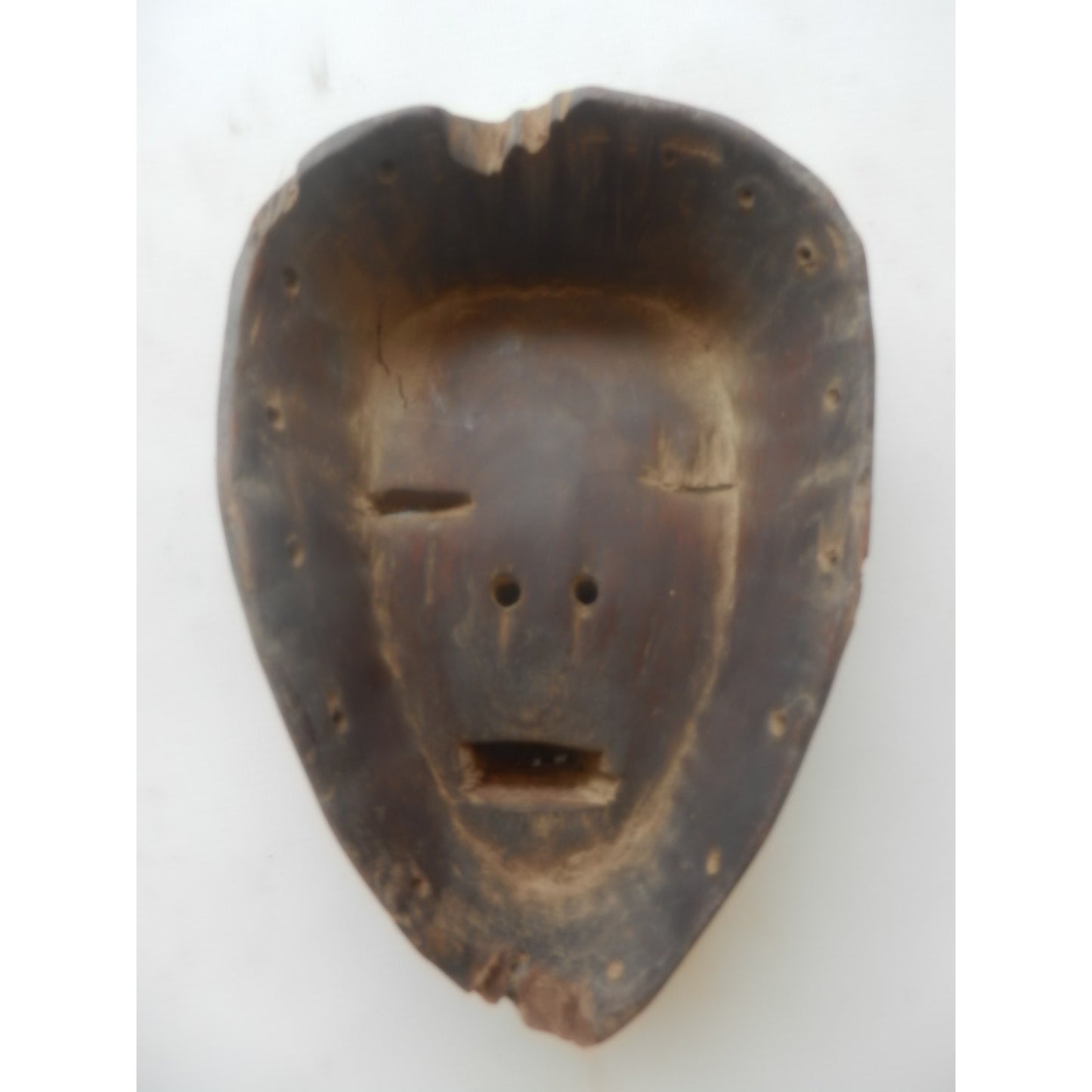
Origin: D.R. Congo — stylistically consistent with Lwalwa or Salampasu carving traditions (Central Congo Basin)
Material: Hand-carved wood, dark aged patina, natural fiber/wood teeth inlay
Height: 20 cm
Condition: Age-consistent surface wear, stable patina, teeth intact, no visible structural cracks (recommend in-person inspection for full condition report)
Description:
A striking carved wood mask with an elongated heart-shaped face, deeply set slit eyes beneath heavy brow ridges, and a strong vertical nose ridge. The open mouth reveals a row of sharply filed, pointed teeth in an intense grimace — a hallmark of masks used to project power and authority during initiation rites. The face is marked with fine punctate scarification lines beneath the eyes and vertical grooved striations across the forehead, both decorative and symbolically loaded elements in Central African mask carving. The surface carries a deep, worn patina consistent with genuine ceremonial handling and age.
Cultural Significance:
Masks of this type from the DRC's Congo Basin region are historically tied to men's initiation societies and warrior associations. The aggressive, tooth-baring expression is a deliberate design choice meant to embody strength, protective spirit power, or ancestral authority during performance — masks like this were "danced" during initiation ceremonies marking a young man's passage into adulthood, or during rites asserting social and political authority within the community. The dotted scarification patterns often echo real body markings once used to signify status, lineage, or spiritual protection.
Notes for Collectors:
Attribution to a specific ethnic group (Lwalwa vs. Salampasu vs. related regional style) is offered as an informed estimate based on visual/stylistic comparison — buyers seeking certified provenance should consult a specialist in Congo Basin masking traditions, ideally with the piece examined in hand.
Store away from direct sunlight and high humidity to protect the patina and prevent wood movement or cracking.
A light museum wax can be used for stabilization by experienced collectors — test on a small area first.
Material: Hand-carved wood, dark aged patina, natural fiber/wood teeth inlay
Height: 20 cm
Condition: Age-consistent surface wear, stable patina, teeth intact, no visible structural cracks (recommend in-person inspection for full condition report)
Description:
A striking carved wood mask with an elongated heart-shaped face, deeply set slit eyes beneath heavy brow ridges, and a strong vertical nose ridge. The open mouth reveals a row of sharply filed, pointed teeth in an intense grimace — a hallmark of masks used to project power and authority during initiation rites. The face is marked with fine punctate scarification lines beneath the eyes and vertical grooved striations across the forehead, both decorative and symbolically loaded elements in Central African mask carving. The surface carries a deep, worn patina consistent with genuine ceremonial handling and age.
Cultural Significance:
Masks of this type from the DRC's Congo Basin region are historically tied to men's initiation societies and warrior associations. The aggressive, tooth-baring expression is a deliberate design choice meant to embody strength, protective spirit power, or ancestral authority during performance — masks like this were "danced" during initiation ceremonies marking a young man's passage into adulthood, or during rites asserting social and political authority within the community. The dotted scarification patterns often echo real body markings once used to signify status, lineage, or spiritual protection.
Notes for Collectors:
Attribution to a specific ethnic group (Lwalwa vs. Salampasu vs. related regional style) is offered as an informed estimate based on visual/stylistic comparison — buyers seeking certified provenance should consult a specialist in Congo Basin masking traditions, ideally with the piece examined in hand.
Store away from direct sunlight and high humidity to protect the patina and prevent wood movement or cracking.
A light museum wax can be used for stabilization by experienced collectors — test on a small area first.