


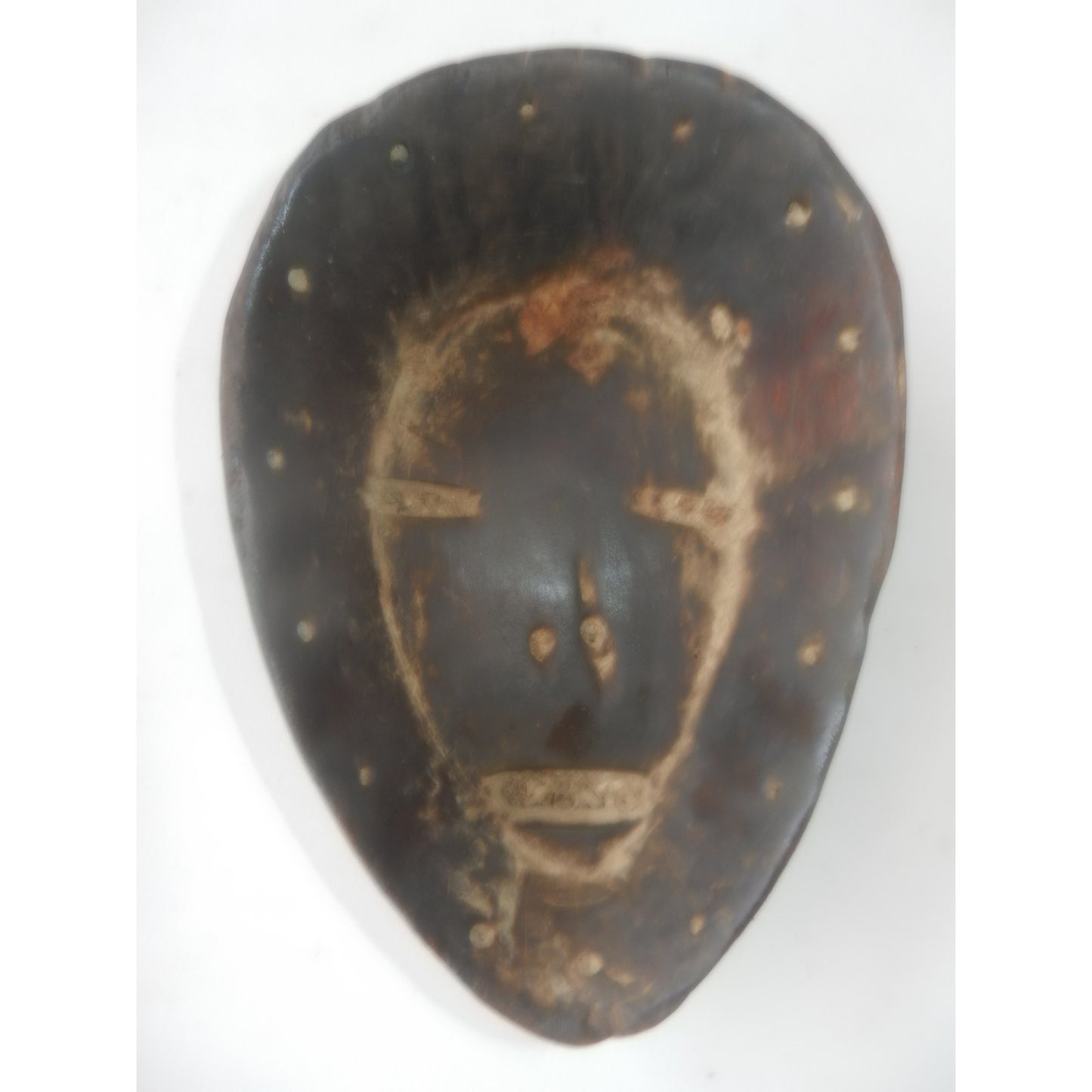
Origin: Democratic Republic of Congo — Lwalwa peoples (Kasai region)
Dimensions: 20 cm x 12 cm
Material: Hand-carved wood, aged dark patina with lighter wear tones at raised planes
Condition: Stable, age-consistent surface wear and patina; teeth intact; no visible structural cracks (buyers should request additional close-up photos or an in-person viewing for full condition assessment)
About this piece:
A classically proportioned Lwalwa mask carved from a single piece of wood, presenting an elongated, heart-shaped face that tapers to a pronounced pointed chin. The forehead is smooth and domed, bisected by a subtle vertical ridge running down into a strong straight nose. The eyes are rendered as narrow, downward-sloping slits beneath minimal brow definition, giving the face a composed, introspective expression — a hallmark of the Lwalwa carving idiom, which favors restraint and geometric clarity over exaggerated features. The mouth is the mask's most striking element: a protruding lower jaw baring a row of small, sharply filed teeth, set beneath a calm upper lip. The surface carries a rich, deeply worn patina — darker in the recesses, lighter along the cheeks, brow, and chin where handling and light exposure have worn the finish over time.
Cultural Significance:
The Lwalwa people of the southwestern Kasai region are renowned among collectors and scholars for masks with this distinctive heart-shaped facial structure and quiet, dignified expression, differing from the more overtly aggressive masking traditions of some neighboring Congo Basin groups. Lwalwa masks are traditionally used within initiation ceremonies (associated with the mukanda or comparable rites of passage) marking a young man's transition into adulthood, and in performances tied to social regulation, ancestral communication, and the assertion of male authority within the community. The bared teeth, while restrained compared to more theatrical regional styles, are thought to signal readiness, vigilance, or the mask's spiritual potency during dance performance. Masks like this were typically owned communally or by initiation society leaders rather than individuals, underscoring their role as instruments of collective ritual life rather than purely decorative objects.
Notes for Collectors
This attribution reflects stylistic assessment; buyers seeking certified provenance or a formal appraisal should consult a specialist in Congo Basin masking traditions.
Recommended care: keep away from direct sunlight and high humidity to preserve the patina and prevent wood movement.
A light museum wax may be used for stabilization by experienced collectors — test on a small, inconspicuous area first.
Dimensions: 20 cm x 12 cm
Material: Hand-carved wood, aged dark patina with lighter wear tones at raised planes
Condition: Stable, age-consistent surface wear and patina; teeth intact; no visible structural cracks (buyers should request additional close-up photos or an in-person viewing for full condition assessment)
About this piece:
A classically proportioned Lwalwa mask carved from a single piece of wood, presenting an elongated, heart-shaped face that tapers to a pronounced pointed chin. The forehead is smooth and domed, bisected by a subtle vertical ridge running down into a strong straight nose. The eyes are rendered as narrow, downward-sloping slits beneath minimal brow definition, giving the face a composed, introspective expression — a hallmark of the Lwalwa carving idiom, which favors restraint and geometric clarity over exaggerated features. The mouth is the mask's most striking element: a protruding lower jaw baring a row of small, sharply filed teeth, set beneath a calm upper lip. The surface carries a rich, deeply worn patina — darker in the recesses, lighter along the cheeks, brow, and chin where handling and light exposure have worn the finish over time.
Cultural Significance:
The Lwalwa people of the southwestern Kasai region are renowned among collectors and scholars for masks with this distinctive heart-shaped facial structure and quiet, dignified expression, differing from the more overtly aggressive masking traditions of some neighboring Congo Basin groups. Lwalwa masks are traditionally used within initiation ceremonies (associated with the mukanda or comparable rites of passage) marking a young man's transition into adulthood, and in performances tied to social regulation, ancestral communication, and the assertion of male authority within the community. The bared teeth, while restrained compared to more theatrical regional styles, are thought to signal readiness, vigilance, or the mask's spiritual potency during dance performance. Masks like this were typically owned communally or by initiation society leaders rather than individuals, underscoring their role as instruments of collective ritual life rather than purely decorative objects.
Notes for Collectors
This attribution reflects stylistic assessment; buyers seeking certified provenance or a formal appraisal should consult a specialist in Congo Basin masking traditions.
Recommended care: keep away from direct sunlight and high humidity to preserve the patina and prevent wood movement.
A light museum wax may be used for stabilization by experienced collectors — test on a small, inconspicuous area first.