


Height: 73 cm
Material: Hand-carved wood, aged two-tone patina (dark upper figure, lighter oxidized plank base)
Provenance: Original field piece, authenticated by Alobalo
About Alobalo:
Alobalo is a family-run specialist in African tribal art, with more than 30 years of experience sourcing and presenting authentic ceremonial and ritual pieces from over 200 ethnic groups across the continent. Our collection reflects a deep, generational commitment to respecting the cultural context and craftsmanship behind every object we offer.
Description:
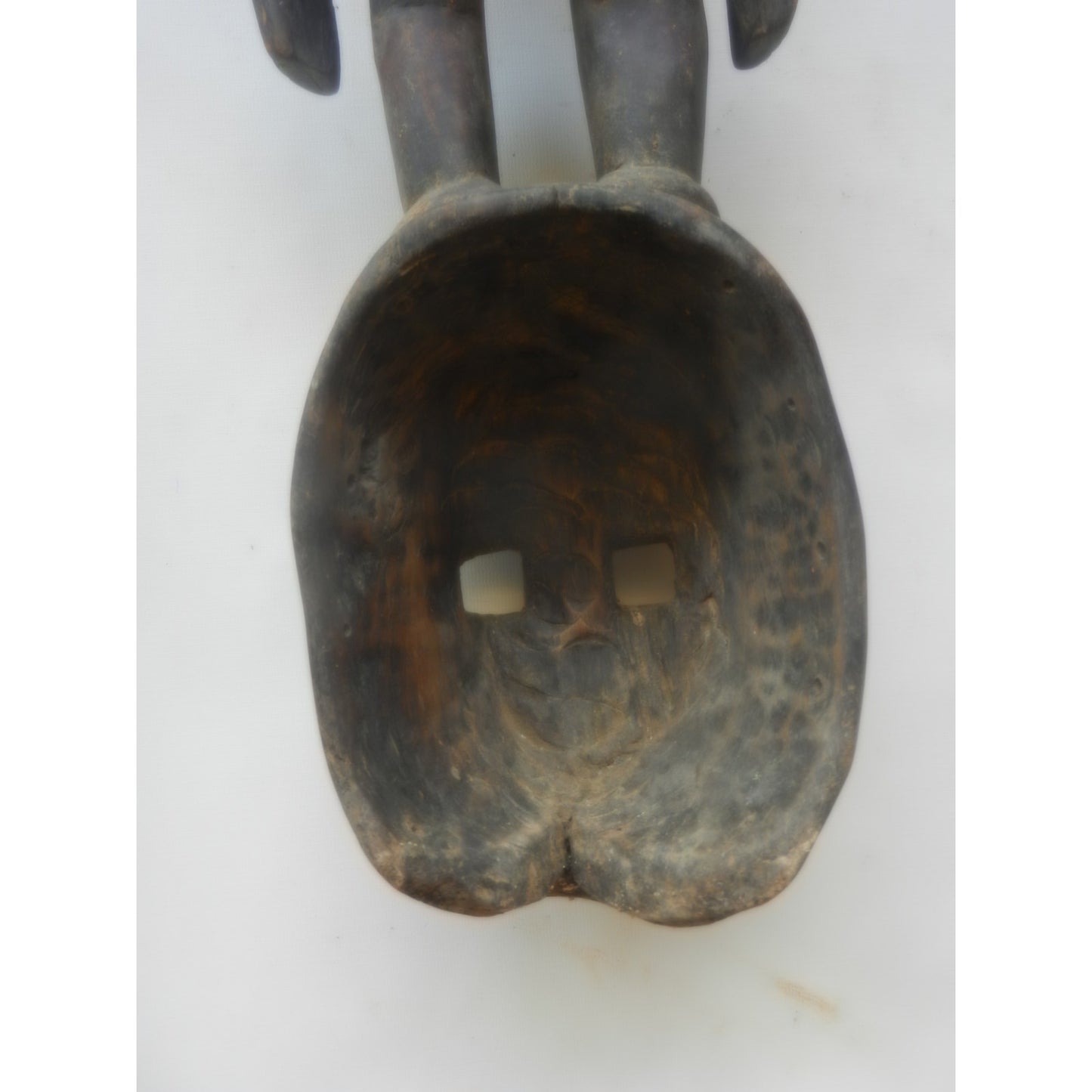
A striking Mossi plank mask from the Yatenga region, combining a vertically elongated oval plank base with a fully carved human figure standing atop it. The lower plank is rendered in a warm, lighter reddish-brown patina, pierced with rectangular eye openings and marked by a central vertical ridge with fine incised striations running its length — a hallmark decorative treatment in Mossi plank mask carving from this region. Surmounting the plank is a finely detailed standing female figure, carved in darker contrasting wood: a serene face with almond eyes and a straight nose, small carved ear ornaments, a slender torso with defined breasts, and a navel marked by a radiating incised star pattern. The arms hang gracefully at the sides, and the figure's legs merge directly into the plank below, unifying the composition into a single ceremonial form. The two-tone patina — dark on the upper figure, lighter and more weathered on the plank — is consistent with genuine age and differential handling/exposure over the mask's ceremonial life.
Cultural Significance:
Among the Mossi people of Burkina Faso, plank masks of this type (sometimes called karanga or associated with wango masking traditions depending on sub-region) are central to funerary and agricultural ceremonies, particularly in the Yatenga province around Ouahigouya, a historic center of Mossi political and ritual authority. The human figure surmounting the plank — frequently female, as here — is understood to represent an ancestral or protective spirit, invoked during initiation rites, funerals of respected elders, and seasonal ceremonies tied to agricultural renewal. These masks are danced by young initiated men and are believed to carry the presence of ancestral guardians who oversee the moral and spiritual order of the community. The vertical plank form itself, with its towering silhouette, is designed to be seen at a distance during outdoor ceremonial performance, reinforcing the mask's role as a powerful, visible link between the living community and its ancestors.
Material: Hand-carved wood, aged two-tone patina (dark upper figure, lighter oxidized plank base)
Provenance: Original field piece, authenticated by Alobalo
About Alobalo:
Alobalo is a family-run specialist in African tribal art, with more than 30 years of experience sourcing and presenting authentic ceremonial and ritual pieces from over 200 ethnic groups across the continent. Our collection reflects a deep, generational commitment to respecting the cultural context and craftsmanship behind every object we offer.
Description:
A striking Mossi plank mask from the Yatenga region, combining a vertically elongated oval plank base with a fully carved human figure standing atop it. The lower plank is rendered in a warm, lighter reddish-brown patina, pierced with rectangular eye openings and marked by a central vertical ridge with fine incised striations running its length — a hallmark decorative treatment in Mossi plank mask carving from this region. Surmounting the plank is a finely detailed standing female figure, carved in darker contrasting wood: a serene face with almond eyes and a straight nose, small carved ear ornaments, a slender torso with defined breasts, and a navel marked by a radiating incised star pattern. The arms hang gracefully at the sides, and the figure's legs merge directly into the plank below, unifying the composition into a single ceremonial form. The two-tone patina — dark on the upper figure, lighter and more weathered on the plank — is consistent with genuine age and differential handling/exposure over the mask's ceremonial life.
Cultural Significance:
Among the Mossi people of Burkina Faso, plank masks of this type (sometimes called karanga or associated with wango masking traditions depending on sub-region) are central to funerary and agricultural ceremonies, particularly in the Yatenga province around Ouahigouya, a historic center of Mossi political and ritual authority. The human figure surmounting the plank — frequently female, as here — is understood to represent an ancestral or protective spirit, invoked during initiation rites, funerals of respected elders, and seasonal ceremonies tied to agricultural renewal. These masks are danced by young initiated men and are believed to carry the presence of ancestral guardians who oversee the moral and spiritual order of the community. The vertical plank form itself, with its towering silhouette, is designed to be seen at a distance during outdoor ceremonial performance, reinforcing the mask's role as a powerful, visible link between the living community and its ancestors.